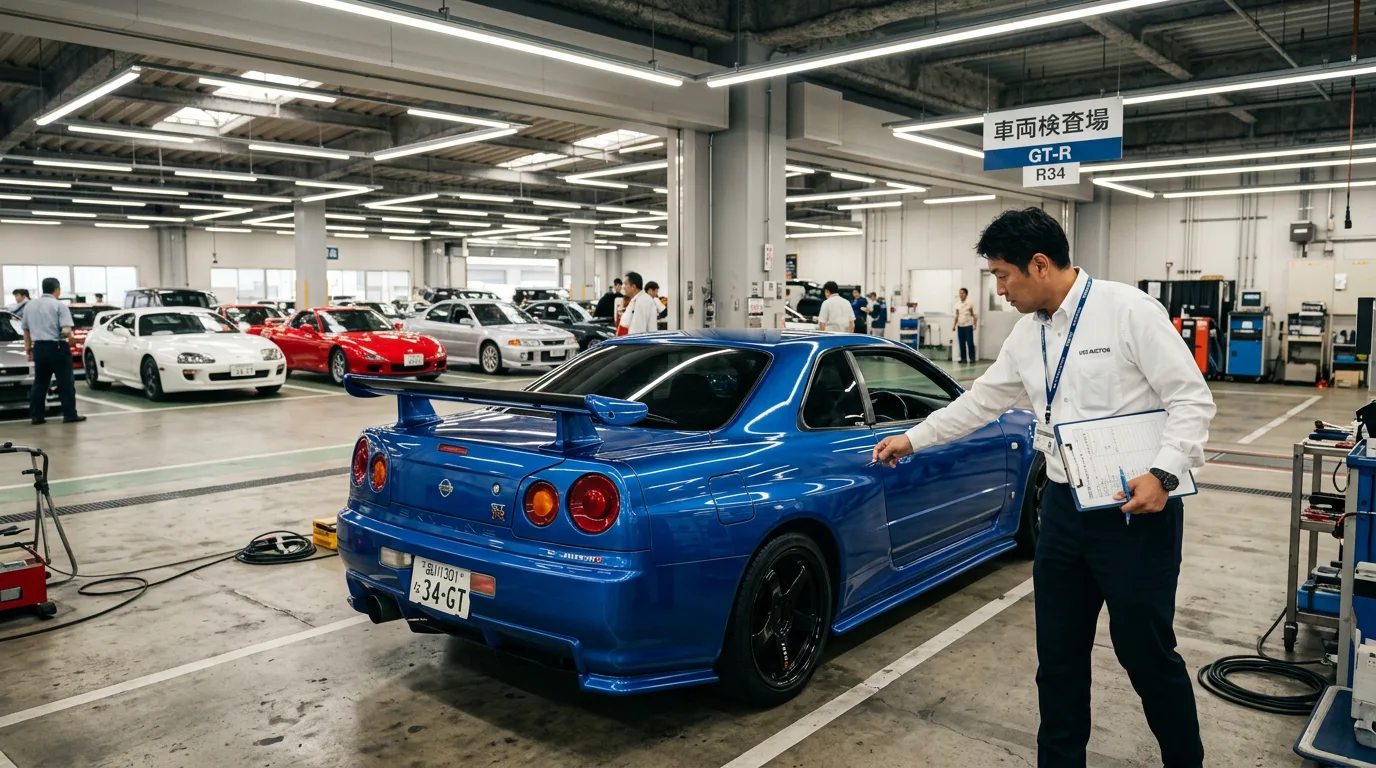
Bringing a car home from Japan is one of the most rewarding things a car enthusiast can do. You end up with a vehicle that's rare on this side of the world, often better maintained than anything local, and genuinely special to own. But the process has a few traps — and first-time buyers tend to fall into the same ones over and over.
The good news: every one of these mistakes is completely avoidable once you know it's coming. After years of importing vehicles to Puerto Rico, we've seen exactly where people lose money, patience, and sometimes the car they wanted. Here are the seven biggest first-time mistakes, and the simple habits that protect you from each.
Mistake #1: Ignoring the Auction Inspection Sheet
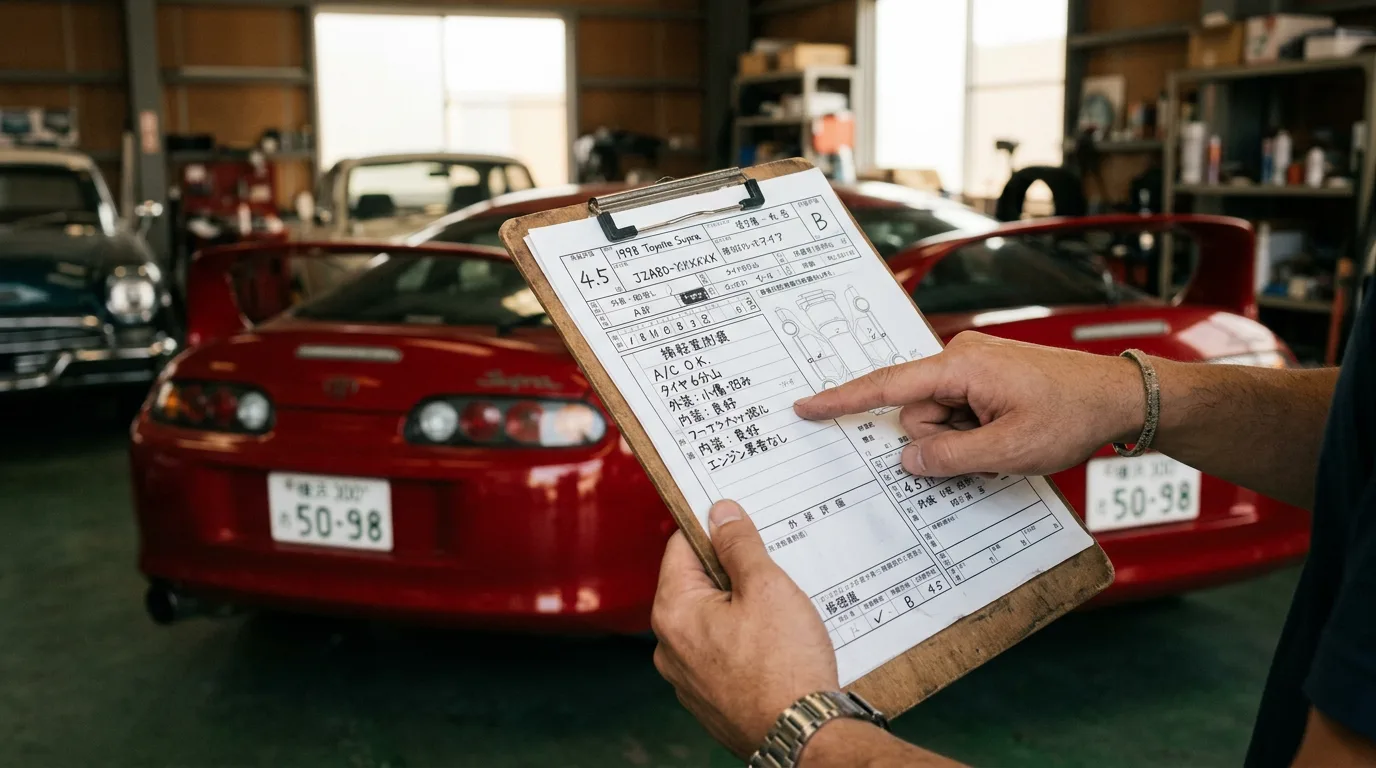
The single most expensive mistake a first-time buyer can make is trusting the photos and skipping the auction inspection sheet. Every car sold at a Japanese auction comes with a sheet that grades the vehicle's overall condition, its interior, and — crucially — includes a diagram where an independent inspector marks scratches, dents, rust, and any accident repair.
Photos can hide a lot. The sheet can't lie nearly as easily. A car that looks flawless in the listing can carry a repair history or corrosion that only shows up in the inspector's notes.
How to avoid it: Never bid on a car until someone has read and translated the full auction sheet for you. If a seller can't or won't produce it, walk away. We pull and explain the sheet on every car before you commit — grade, interior score, and every mark on the diagram. Want to go deeper? Our guides on reading auction grades and why the auction sheet matters break it down step by step.
Mistake #2: Only Looking at the Sticker Price
A car listed at $8,000 in Japan does not cost $8,000 to land in Puerto Rico. First-time buyers routinely budget for the vehicle price alone and then get blindsided by the total.
The real landed cost includes the auction/purchase price, domestic transport in Japan, export paperwork, ocean freight, insurance, and local import handling once it arrives. Skip that math and you can be short by thousands right when the car is sitting at the port.
How to avoid it: Always work from the landed cost — the all-in number to get the car to your door — not the auction price. Ask your importer for a complete breakdown before you bid. We spell out exactly what goes into a quote in our guide on how much it costs to import a car from Japan to Puerto Rico.
Mistake #3: Forgetting the Exchange Rate Moves
Cars in Japan are priced in yen, not dollars. That means your dollar cost can change from one week to the next even when the seller never touches the price. A swing from ¥160 to ¥153 per dollar can add hundreds to the same car.
First-time buyers often lock a dollar figure in their head, then feel blindsided when a quote a week later is different. It's not a markup — it's the currency moving underneath the deal.
How to avoid it: Think in yen first, and treat the dollar figure as today's translation of it. Ask which exchange rate is behind your quote — a transparent importer will always tell you. We monitor the rate daily and show you the math; you can read the full explainer in Yen vs. Dollar: why the exchange rate decides what your import costs.
Mistake #4: Not Understanding the 25-Year Rule
The rules around which vehicles can be imported and registered are non-negotiable, and misunderstanding them is heartbreaking. Buyers fall in love with a specific car, put money down, and only then discover it isn't yet eligible.
Eligibility is tied to the vehicle's age, and the list of legal cars grows every single year as more models cross the threshold. The car that's off-limits today may be perfectly importable next year.
How to avoid it: Confirm eligibility before you get emotionally (or financially) attached to a specific chassis. If your dream car isn't ready yet, we'll tell you exactly when it will be — and often suggest a similar model that's legal right now. See what's newly eligible in our roundup of the best JDM cars now legal in 2026.
Mistake #5: Overlooking Registration and Paperwork
Getting the car to the island is only half the journey. Plenty of first-time importers celebrate at the port and then hit a wall at registration because they didn't plan for the local paperwork and DTOP process.
Missing or incorrect documents can leave a perfectly good car stuck and undriveable for weeks. The export certificate, bill of lading, and proper title work all need to line up.
How to avoid it: Understand the registration path before the car ships, and keep every document organized. We walk clients through the whole thing — our guide to registering a JDM vehicle with DTOP in Puerto Rico covers exactly what you'll need and in what order.
Mistake #6: Underestimating Right-Hand Drive and Maintenance
Most JDM vehicles are right-hand drive, and that's part of the charm — but first-timers sometimes forget to factor it into daily life. It takes a little adjustment, especially at toll booths and drive-throughs, and it's worth a few careful practice drives.
Maintenance is the other blind spot. A Japanese car in a tropical climate has specific needs — salt air, heat, and humidity all take a toll if you're not proactive. And parts sourcing for a niche model requires a plan, not panic when something breaks.
How to avoid it: Go in with realistic expectations. Read up on driving right-hand drive safely and on keeping a JDM car healthy in a tropical climate before your car arrives, so ownership is pure enjoyment from day one.
Mistake #7: Choosing an Importer on Price Alone
The cheapest quote is rarely the best deal. Importing involves trust across an ocean — you're relying on someone to inspect honestly, bid fairly, handle export correctly, and communicate the whole way. Cut-rate operators often make up the difference with hidden fees, vague condition reports, or silence when something goes wrong.
First-time buyers, understandably, gravitate to the lowest number. But a slightly higher quote from someone transparent and responsive almost always costs less in the end than a cheap quote that turns into a headache.
How to avoid it: Judge an importer on transparency, communication, and how clearly they explain the process — not just the bottom-line figure. Ask questions and see how they answer. If you ever feel rushed or kept in the dark, that's your signal.
None of these mistakes are hard to avoid — they just catch people who didn't know to look for them. Read the auction sheet, budget for the landed cost, respect the exchange rate, confirm eligibility, plan the paperwork, prepare for ownership, and choose an importer you trust. Do those seven things and importing your first JDM car becomes exactly what it should be: exciting, transparent, and genuinely fun.
Thinking about your first import? Browse the live lots on our Japan Auctions page, or message me directly on WhatsApp with the car you have in mind. I'll read the auction sheet, give you an honest all-in quote, and walk you through every step to Puerto Rico.
— J.J. Canino, Founder, JDM Direct
📚 Related Resources
Stay Updated
Get the latest JDM insights, new arrivals, and exclusive content delivered to your inbox.
Stay Updated on New Arrivals
Get notified when fresh JDM legends arrive in our inventory
We respect your privacy. Unsubscribe anytime.
Related Posts
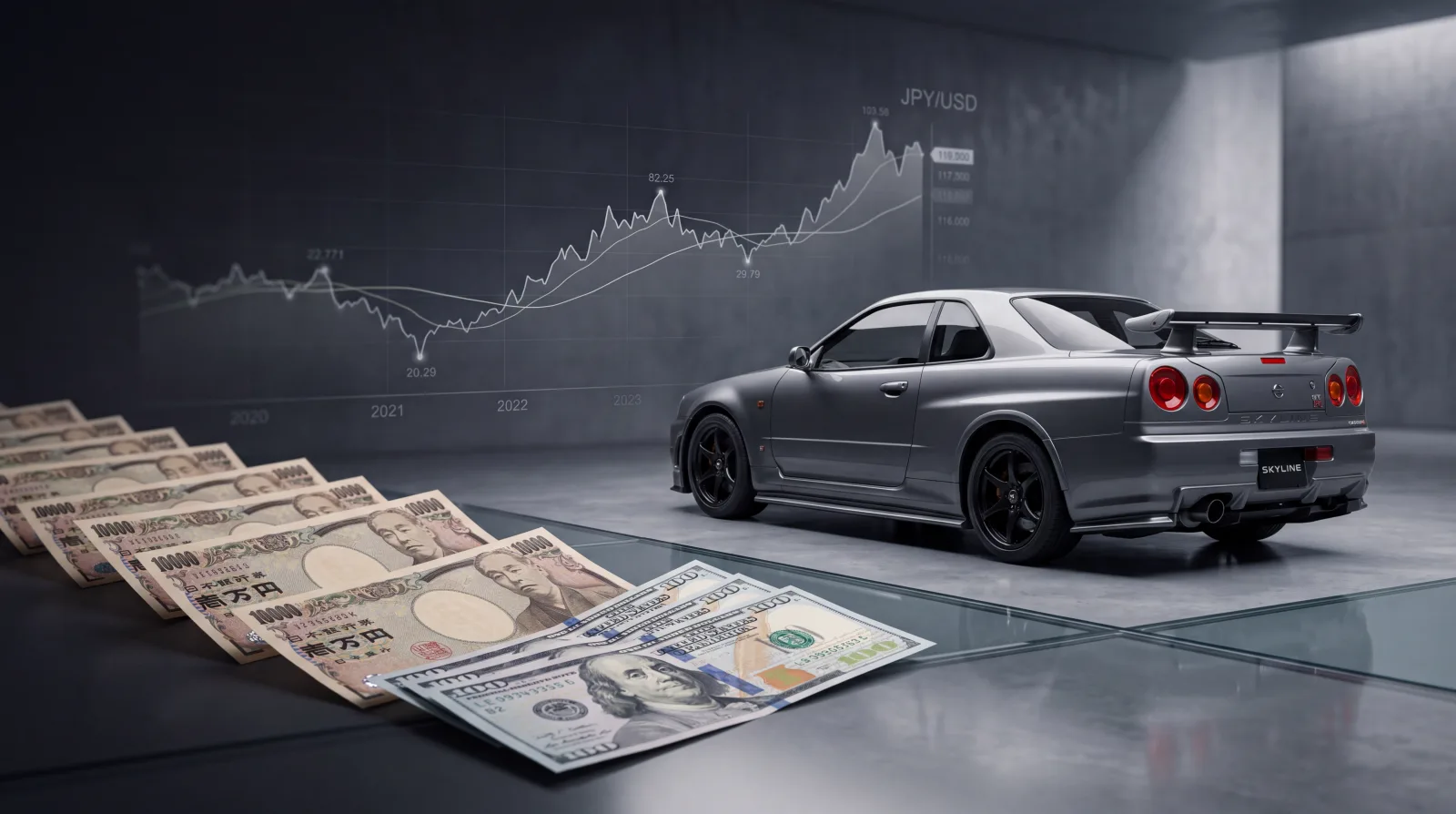
Yen vs. Dollar: Why the Exchange Rate Quietly Decides What Your JDM Import Costs
The yen just strengthened from about ¥160 to ¥153 per dollar in a matter of days — and that alone can add hundreds to the price of a car in Japan, even when the seller never raised it. Here's exactly how the exchange rate works, in plain English, and how to use it to your advantage.

Kei Trucks: The Ultimate Guide to Japan's Mini Workhorses for Puerto Rico
Discover why Japanese Kei trucks are becoming the go-to choice for farmers, landscapers, and small business owners in Puerto Rico. Compact, efficient, and surprisingly capable.
The Complete Guide to JDM Engines: What Makes Japanese Motors So Reliable
From the legendary Honda B-series to Toyota's bulletproof 1JZ, learn why Japanese engines are considered the most reliable in automotive history.