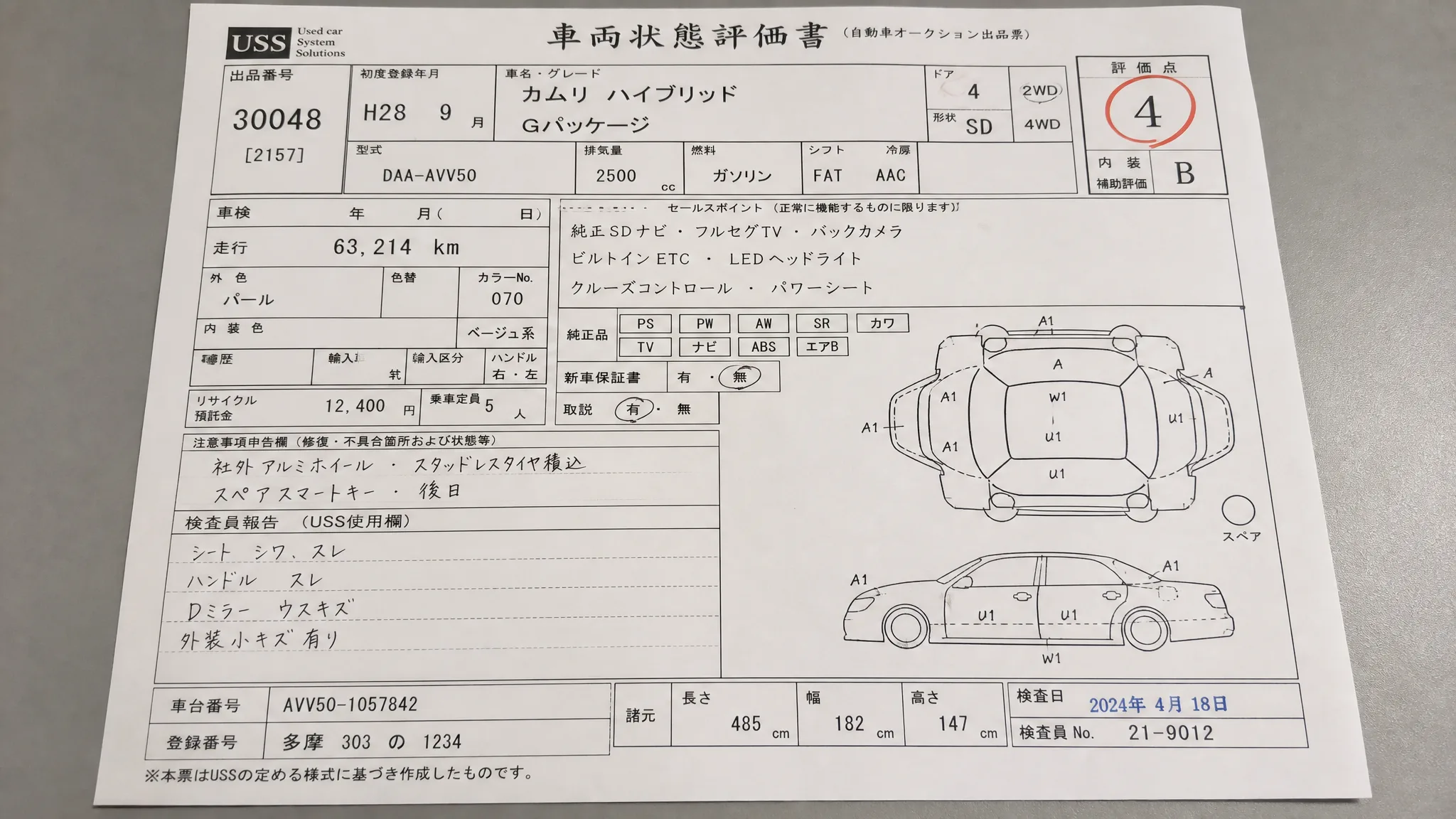
Every JDM vehicle we import passes through a Japanese used-car auction — USS, TAA, JAA, and dozens of others move hundreds of thousands of cars every week. And before any of those cars crosses the block, an independent inspector walks around it, opens the doors, checks the underside, starts the engine, and fills out a single document: the auction sheet.
When people ask me how we can confidently buy a car we've never physically touched, sitting on the other side of the planet, the answer is this piece of paper. The auction sheet is the closest thing the car industry has to an honest, standardized, third-party report card. Learning to read it is the most important skill in JDM importing — and in this guide I'll show you exactly how we use it to protect every client who buys through JDM Direct.
What Exactly Is an Auction Sheet?
An auction sheet is a standardized inspection report created by a neutral, third-party inspector employed by the auction house — not the seller. That independence is the whole point. The inspector has no financial stake in whether the car sells high or low, so they document exactly what they see.
Every auction sheet contains: - An overall grade (a number from 1 to 6, or R/RA for repaired vehicles) - Interior and exterior grades (letters A through D) - A car map diagram with coded symbols marking every dent, scratch, and repair - The verified odometer reading in kilometers - Chassis/model code, year, transmission, displacement, and color - Equipment checkboxes (A/C, power windows, sunroof, aero, etc.) - Handwritten inspector comments in Japanese (often the most valuable part)
Because the format is standardized across the major auction houses, once you learn to read one, you can read them all. This is the document we scrutinize on your behalf before ever placing a bid.
The Overall Grade: A Number That Tells You a Lot
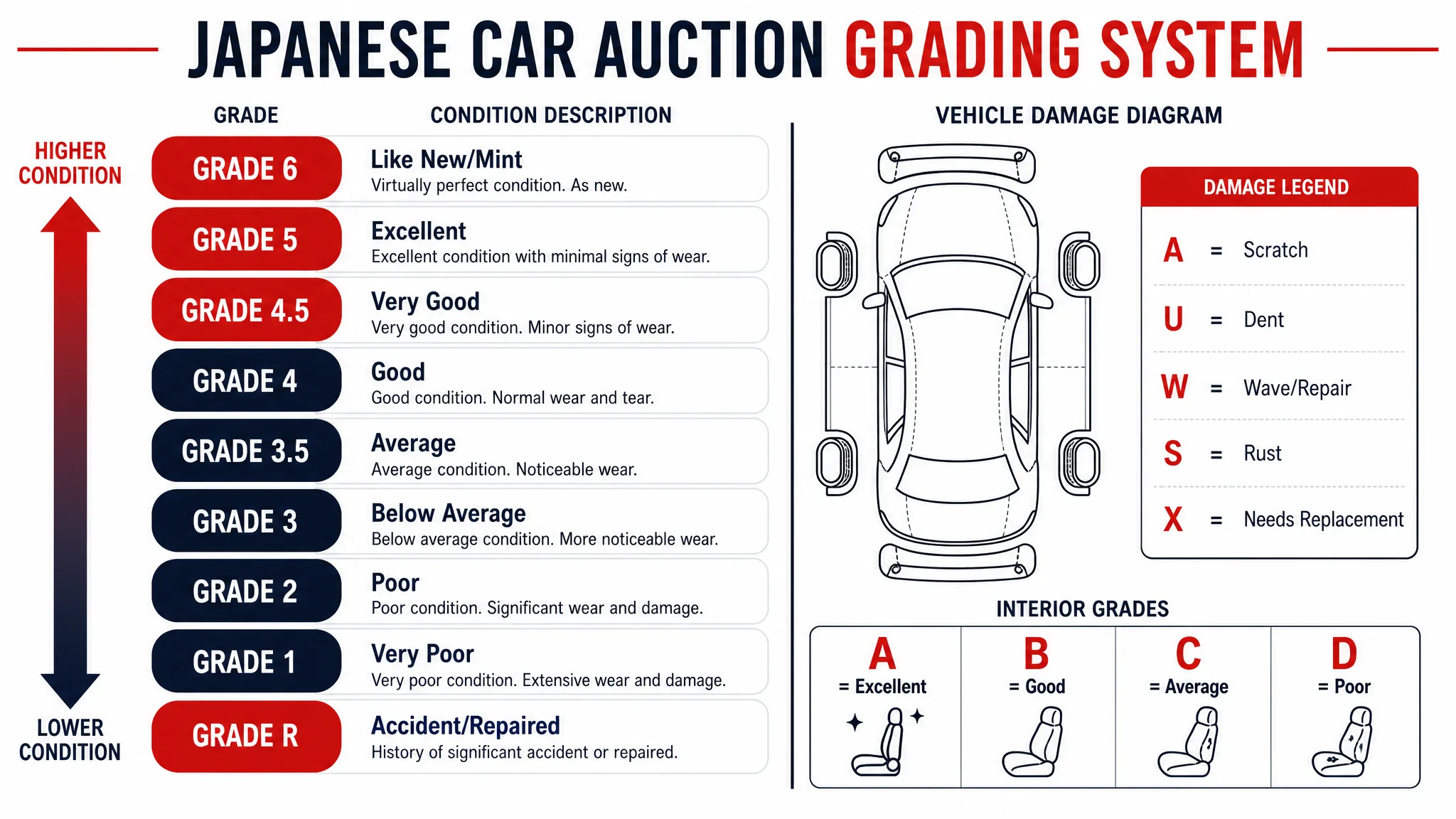
The headline number on any auction sheet is the overall grade. Here's what each one means:
| Grade | Meaning | |-------|---------| | 6 | Essentially new, near-delivery condition, minimal km | | 5 | Excellent — very light wear, well maintained | | 4.5 | Very good — minor cosmetic imperfections only | | 4 | Good — the honest, high-value sweet spot for most buyers | | 3.5 | Average — noticeable wear, small repairs may be needed | | 3 | Below average — visible flaws, higher mileage typical | | 2 | Poor — significant wear or damage | | 1 | Very poor — heavily modified, flood, or major issues | | R / RA | Repaired history — has had accident/structural repair | | S | Brand new car |
My honest take: Grade 4 and 4.5 cars are the backbone of smart JDM importing. They're clean, mechanically sound vehicles without the price premium of a grade 5 or 6. A grade 3.5 can be a fantastic value if the damage map and inspector notes check out. Anything at grade R isn't automatically bad — but it demands extra scrutiny, and I'll always flag it clearly for you.
Interior Grades and the Car Map Diagram
Beyond the overall number, the sheet breaks the car down further:
Interior grade (letters A-D): - A — Excellent, near spotless - B — Good, light normal wear - C — Average, visible wear, possible stains or cigarette use - D — Poor, heavy wear or damage
The car map is the diagram of the vehicle (viewed from above and the sides) covered in letter-and-number codes. This is where the inspector pinpoints the exact location and severity of every flaw. Common symbols include:
| Symbol | Meaning | |--------|---------| | A | Scratch — number after shows severity 1-3 | | U | Dent — U1 tiny, U3 significant | | W | Wave / repair mark (repainted or bodywork done) | | S | Rust | | C | Corrosion | | X | Part needs replacement | | XX | Part already replaced | | B | Dent with scratch | | G | Stone chip / crack in glass |
A number next to the letter grades the severity (1 = minor, 3 = major). So "A2" on the rear door means a moderate scratch on the rear door. We translate this entire map for you so you know precisely what to expect before the car ever ships.
The Inspector's Comments: Where the Real Story Lives
If the grade is the headline, the handwritten Japanese comments are the full article. This section is where inspectors note things that don't fit neatly into a grade or symbol — and it's where experience really pays off.
Inspectors will note things like: - Repair history / previous accident repair (shuufukureki) - Aftermarket modifications (exhaust, suspension, wheels, turbo) - Warning lights currently illuminated - Oil leaks or engine noise - Timing belt replacement records - Non-original paint panels - Whether the car has a full service book
This is exactly why you want an importer who reads Japanese auction sheets fluently. A machine translation might miss the nuance between "minor oil seepage" and "active oil leak" — and that difference could cost you thousands. When we evaluate a sheet for you, we read every comment and tell you the real story in plain English.
How We Actually Use the Auction Sheet at JDM Direct
Here's our real process, step by step, for every vehicle a client asks us to source:
1. Grade filter first. We screen for vehicles in the grade range that matches your budget and expectations — usually 3.5 and up for daily drivers, higher for collector-grade cars.
2. Decode the car map. We map every symbol so you know exactly where the scratches, dents, and any repairs are before you commit.
3. Read every comment. We translate the inspector's handwritten notes — this is where we catch red flags like undisclosed accident history, active leaks, or heavy modification.
4. Cross-check the odometer. The verified km reading on the sheet is one more layer of protection against odometer fraud, since it's recorded independently at auction.
5. Photos + sheet together. We line up the auction photos against the sheet's damage map to confirm the story matches.
6. Honest recommendation. We tell you whether the car is worth bidding on and what a fair maximum bid is. If a sheet has warning signs, we walk away — and we tell you why.
This is the difference between gambling on a car and making an informed purchase. The auction sheet turns a leap of faith into a calculated decision.
Red Flags to Watch For on Any Auction Sheet
Even a decent-looking grade can hide problems. Here are the warning signs I always check for:
Grade R or RA without explanation. Repaired vehicles can be perfectly fine, but you need to know what was repaired and how well. A structural repair is very different from a replaced bumper.
Lots of W marks clustered in one area. Multiple wave/repair marks on adjacent panels often indicate past accident damage that was bodied out — even if the overall grade doesn't say "R."
Repair history noted in the comments. It should always be disclosed and factored into the price.
Rust and corrosion codes (S, C) on structural areas. Surface rust on a 25-year-old car is normal. Structural rust is a dealbreaker.
Warning lights noted but downplayed. An illuminated check-engine or airbag light noted on the sheet needs investigation before purchase.
A grade that doesn't match the photos. If the sheet says grade 4 but the photos show obvious damage, something is off. We always reconcile the two.
When any of these appear, we don't hide them from you — we explain exactly what they mean for the car's value and reliability.
The Japanese auction sheet is the single most powerful tool in the entire JDM import process. It's a standardized, independent, brutally honest assessment of a car's true condition — and once you know how to read it, buying a vehicle from 7,000 miles away stops feeling like a gamble and starts feeling like a smart, informed decision.
That's the whole promise behind JDM Direct: you get the benefit of my years of reading these sheets, decoding the symbols, and translating the inspector's notes, so you know exactly what you're buying before a single dollar changes hands. No surprises when the car lands in Puerto Rico — because we read the fine print first.
Thinking about importing a specific vehicle? Send us the auction listing or chassis code on WhatsApp and we'll pull the auction sheet, translate it, and give you our honest take before you ever place a bid.
— J.J. Canino, Founder, JDM Direct
📚 Related Resources
Stay Updated
Get the latest JDM insights, new arrivals, and exclusive content delivered to your inbox.
Stay Updated on New Arrivals
Get notified when fresh JDM legends arrive in our inventory
We respect your privacy. Unsubscribe anytime.
Related Posts
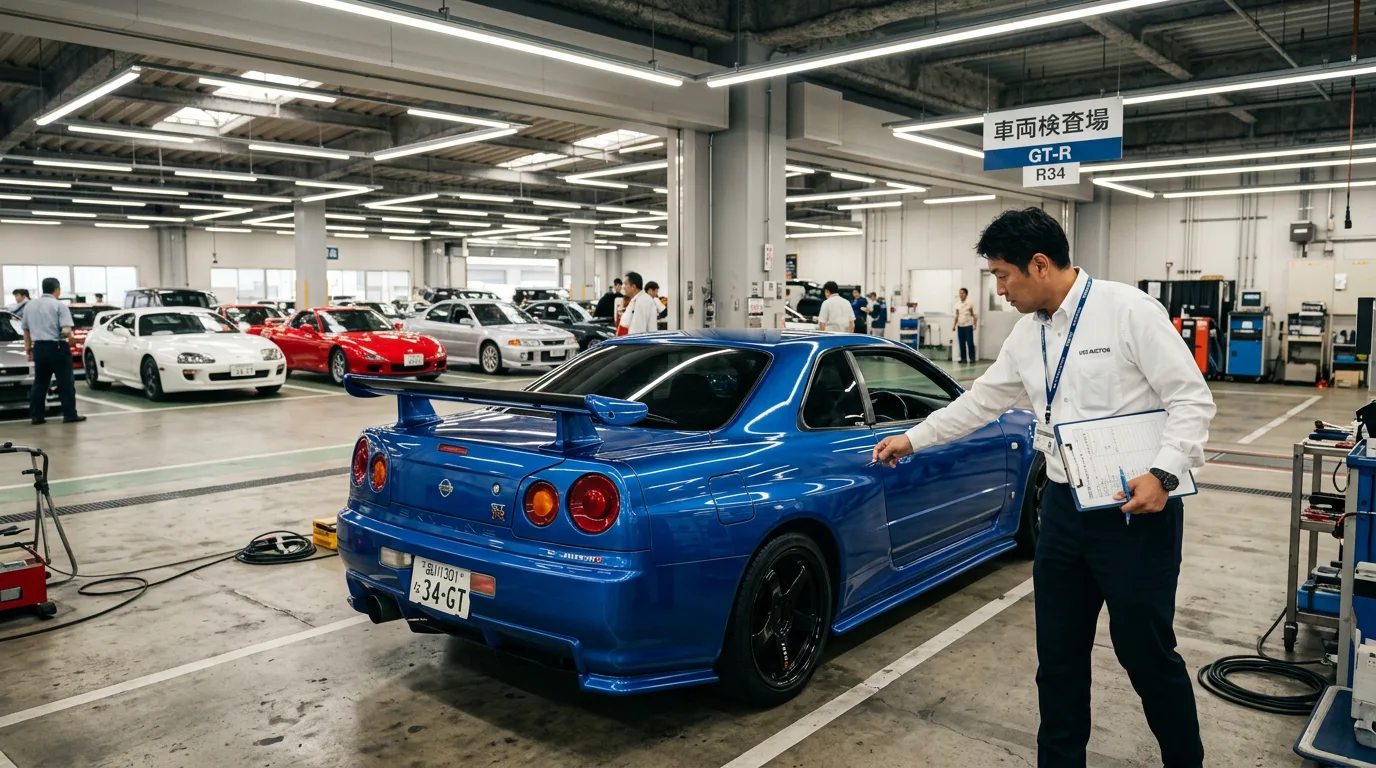
7 Costly Mistakes First-Time JDM Importers Make (and How to Avoid Them)
Importing your first car from Japan should be exciting — not expensive in all the wrong ways. These are the seven mistakes we see first-time buyers make most often, and exactly how to sidestep each one so your dream JDM car arrives in Puerto Rico without nasty surprises.
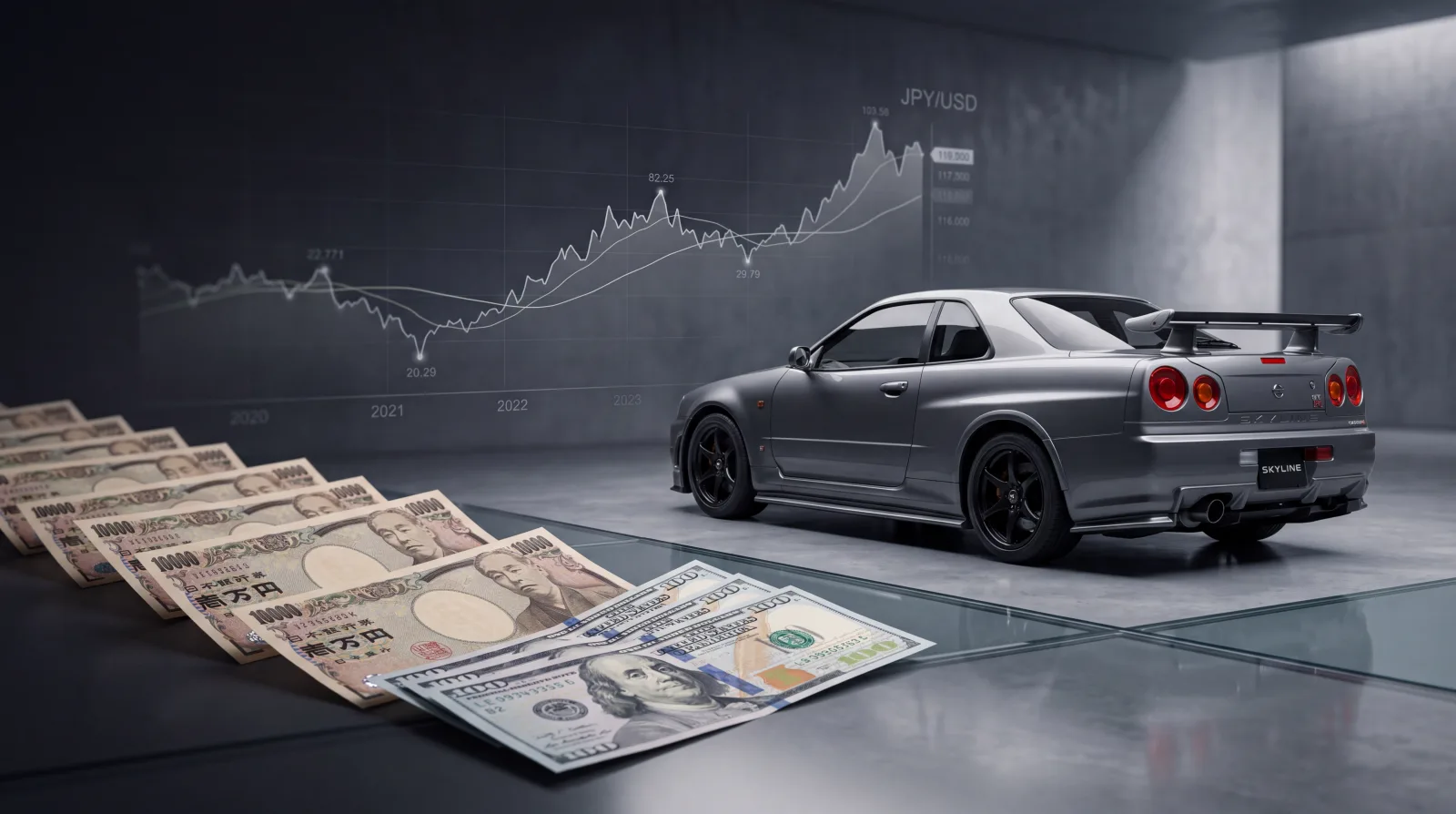
Yen vs. Dollar: Why the Exchange Rate Quietly Decides What Your JDM Import Costs
The yen just strengthened from about ¥160 to ¥153 per dollar in a matter of days — and that alone can add hundreds to the price of a car in Japan, even when the seller never raised it. Here's exactly how the exchange rate works, in plain English, and how to use it to your advantage.

Kei Trucks: The Ultimate Guide to Japan's Mini Workhorses for Puerto Rico
Discover why Japanese Kei trucks are becoming the go-to choice for farmers, landscapers, and small business owners in Puerto Rico. Compact, efficient, and surprisingly capable.