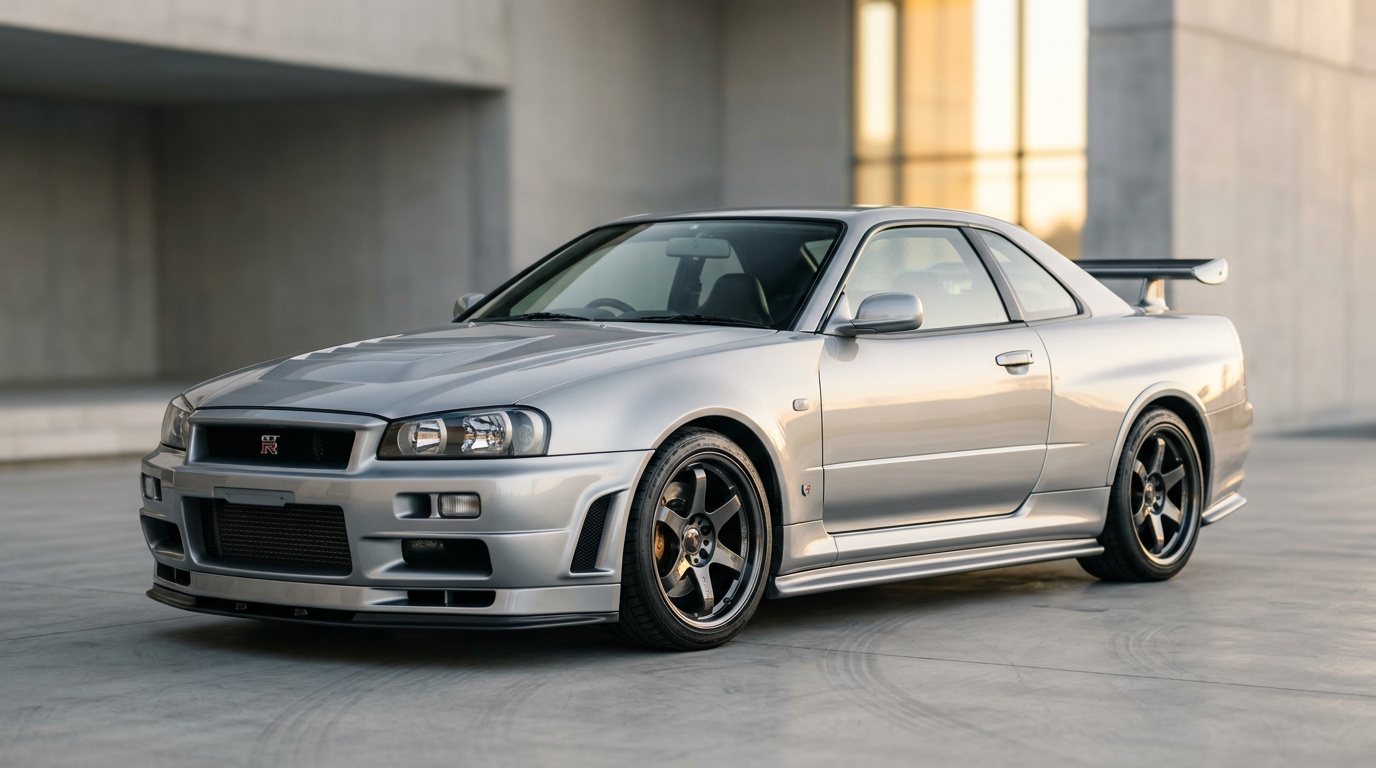
Park a 1999 Nissan Skyline GT-R next to a 2000 model, both finished in silver, and most people would swear they were looking at the same car twice. They're not. Nissan quietly revised the R34 GT-R (chassis code BNR34) partway through its life, and enthusiasts split the run into two eras: the early "Series 1" cars built from January 1999, and the updated "Series 2" cars introduced in the second half of 2000.
The changes are subtle from ten feet away but meaningful once you know where to look — and they affect both how the car drives and what it's worth. As the R34 GT-R crosses the 25-year import threshold and demand from collectors climbs, understanding Series 1 versus Series 2 is one of the most valuable things a buyer can learn before bidding at a Japanese auction. Here's the honest breakdown.
Series 1 vs Series 2: What Actually Changed
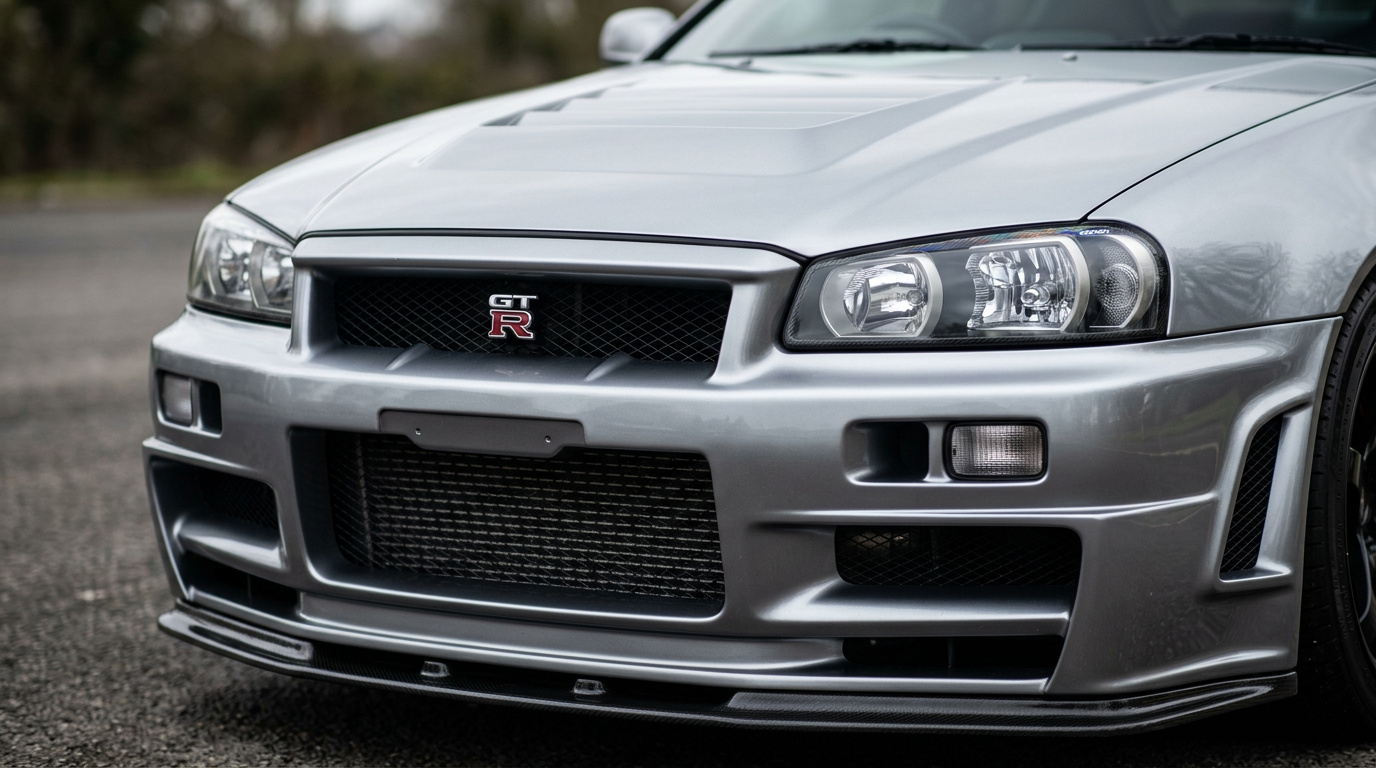
The R34 GT-R launched in January 1999 and ran until the model was retired in 2002. Around May–October 2000, Nissan rolled out a mid-cycle update that created the Series 2 cars. The revisions weren't a full redesign — they were a series of targeted improvements:
Front lighting. The most-cited visual tell is the headlights. Series 2 cars adopted revised headlamp internals with a whiter, more modern output compared to the earlier Series 1 units.
Cooling. Series 2 GT-Rs received a larger front-mounted cooling arrangement and revised ducting to feed the intercooler and radiator more effectively — a nod to how hard these cars were being driven.
Brakes. Later cars came with updated Brembo brake hardware, including revisions aimed at better heat management and pedal feel under repeated hard use.
Turbos and internals. Series 2 cars are widely noted for ball-bearing turbochargers and small revisions intended to improve reliability and response over the earliest examples.
None of this turns a Series 1 into a bad car — the early BNR34 is still a phenomenal machine. But a Series 2 is the more developed, better-cooled evolution of the same platform.
The 1999 Series 1: Purist Appeal and Early-Build Character
A 1999 Series 1 GT-R in silver is the car many purists picture first. These are the earliest BNR34 builds, and they carry a specific appeal for collectors who want the model as it originally debuted.
The upside of a Series 1 is character and, often, provenance — genuine early-production cars with clean auction sheets and low, honest kilometres are increasingly rare. For a buyer who values originality and the "first of the run" story, a well-kept Series 1 is deeply desirable.
The things to watch: because these are the oldest R34 GT-Rs, condition varies widely. Some have lived hard lives, been modified heavily, or had cooling and brake components swapped. On an early car especially, the auction inspection sheet and a careful look at service history matter enormously. A pristine, unmolested Series 1 is a special thing; a tired, modified one is a project.
The 2000 Series 2: The More Developed Everyday Legend
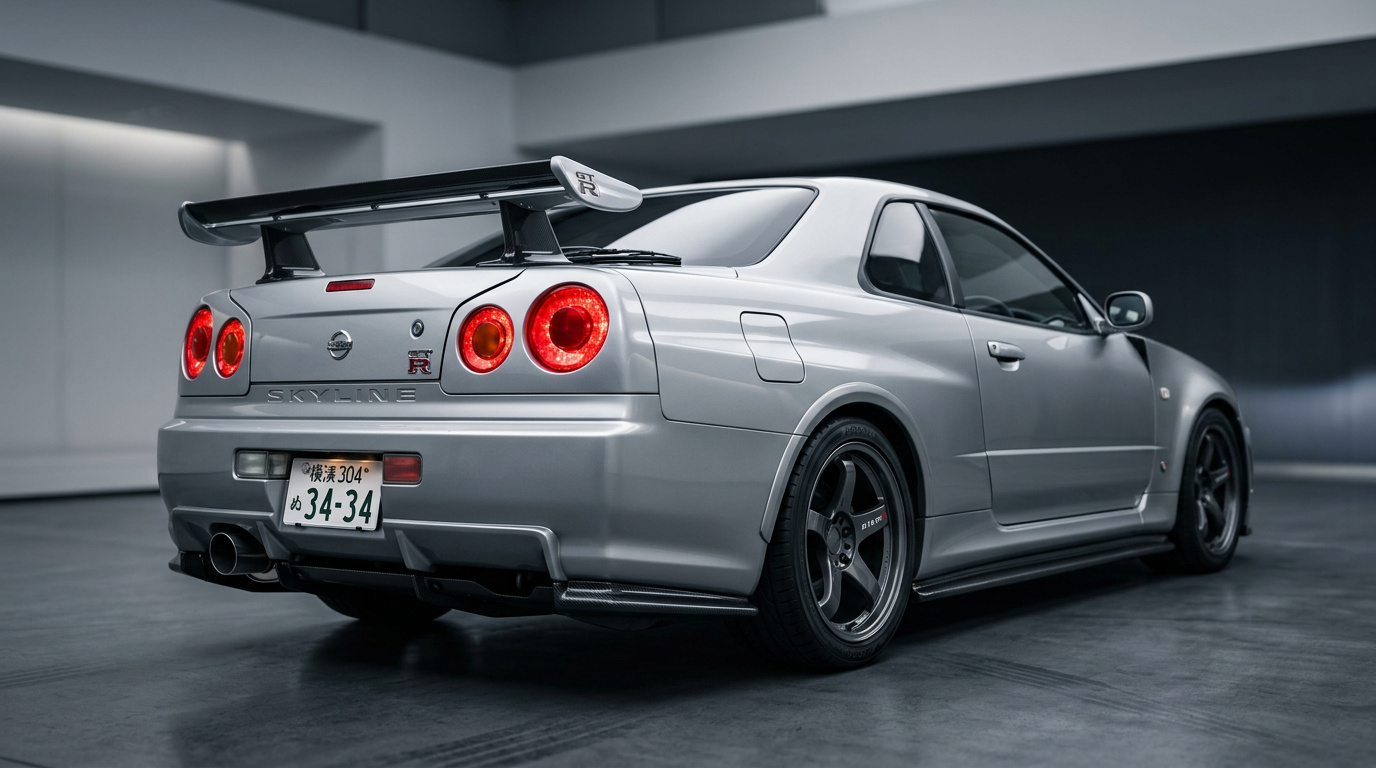
A 2000 Series 2 GT-R takes everything that made the R34 great and sharpens it. The improved cooling, updated brakes, and revised turbos make the Series 2 the choice for buyers who actually want to drive the car hard rather than keep it as a static collectible.
In silver, a Series 2 looks nearly identical to its older sibling to the untrained eye, but the whiter headlights and the larger front cooling opening are the giveaways. For most buyers who want the best blend of usability, reliability, and long-term desirability, the Series 2 is the sweet spot of the R34 GT-R range.
Because Series 2 cars were built later, you'll also generally find a slightly better pool of well-preserved examples — though that gap narrows every year as all R34s age and the best cars get locked away in collections.
Which One Should You Buy?
There's no single right answer — it depends on what you want from the car:
Buy the 1999 Series 1 if: you're a purist or collector who prizes originality, early-build provenance, and the "as-launched" spec, and you're willing to be patient and picky about condition.
Buy the 2000 Series 2 if: you want the most developed version — better cooling, updated brakes, revised turbos — and you plan to enjoy the car regularly, not just display it.
For the majority of our clients, the Series 2 is the easier recommendation: it's the more usable, better-sorted car and holds broad appeal. But a truly clean, unmodified Series 1 with a strong auction sheet can be the more special long-term hold.
Whichever era you chase, condition beats spec. A superb Series 1 is a far better buy than a rough Series 2 — which is exactly why the auction inspection sheet is the most important document in the whole process.
Buying an R34 GT-R at Japanese Auction — What to Check
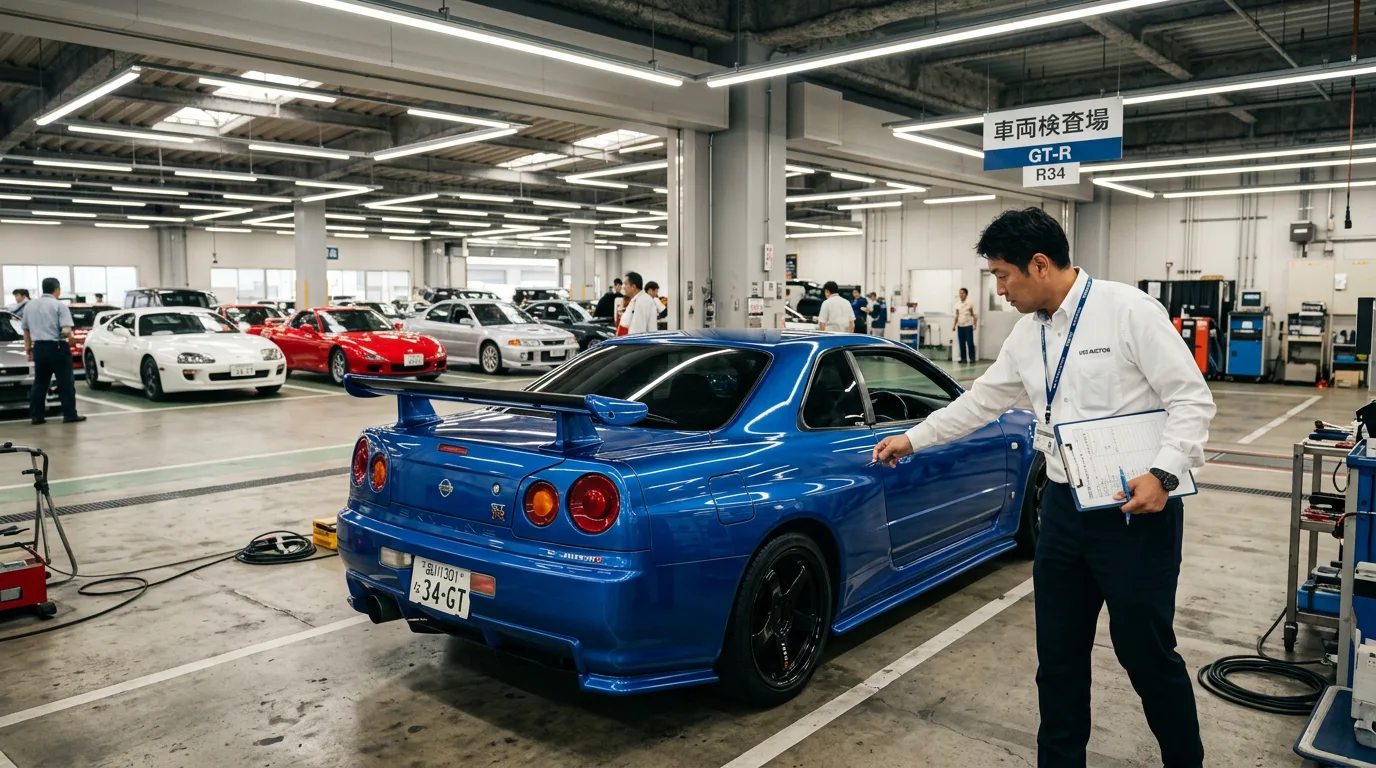
The R34 GT-R is one of the most sought-after and, unfortunately, most misrepresented cars at auction. Prices are high enough that cutting corners is expensive. Before you bid, insist on:
A legible auction inspection sheet. Look at the overall grade, the interior grade, and the inspector's diagram for accident repair marks, rust, and panel work. GT-Rs with structural repair history should be priced accordingly.
Mileage and originality. Verified low kilometres command a premium, but only if the sheet and history support them. Be realistic about modified cars — many R34s have aftermarket turbos, ECUs, and suspension. That's fine if you want it, but it changes the value versus a stock car.
Matching-numbers and spec confirmation. Confirm whether the car is a Series 1 or Series 2, and whether it's a standard GT-R or a special variant, since that dramatically affects value.
This is exactly where we help. When you find an R34 GT-R you like, we pull the full auction sheet, give you an honest read on condition and spec, and bid on your behalf — then coordinate export and shipping all the way to Puerto Rico.
Two silver R34 GT-Rs can look like twins in a photo and still be meaningfully different cars underneath. The 1999 Series 1 is the purist's early-build icon; the 2000 Series 2 is the more developed, better-cooled evolution that most drivers will get on best with. Neither is a wrong choice — but knowing the difference is what separates an informed buyer from someone overpaying for the wrong car.
Thinking about adding an R34 GT-R to your garage in Puerto Rico? Browse the live lots on our Japan Auctions page, or message me the chassis code on WhatsApp and I'll pull the auction sheet and give you my honest take before you commit.
— J.J. Canino, Founder, JDM Direct
📚 Related Resources
Stay Updated
Get the latest JDM insights, new arrivals, and exclusive content delivered to your inbox.
Stay Updated on New Arrivals
Get notified when fresh JDM legends arrive in our inventory
We respect your privacy. Unsubscribe anytime.
Latest Posts
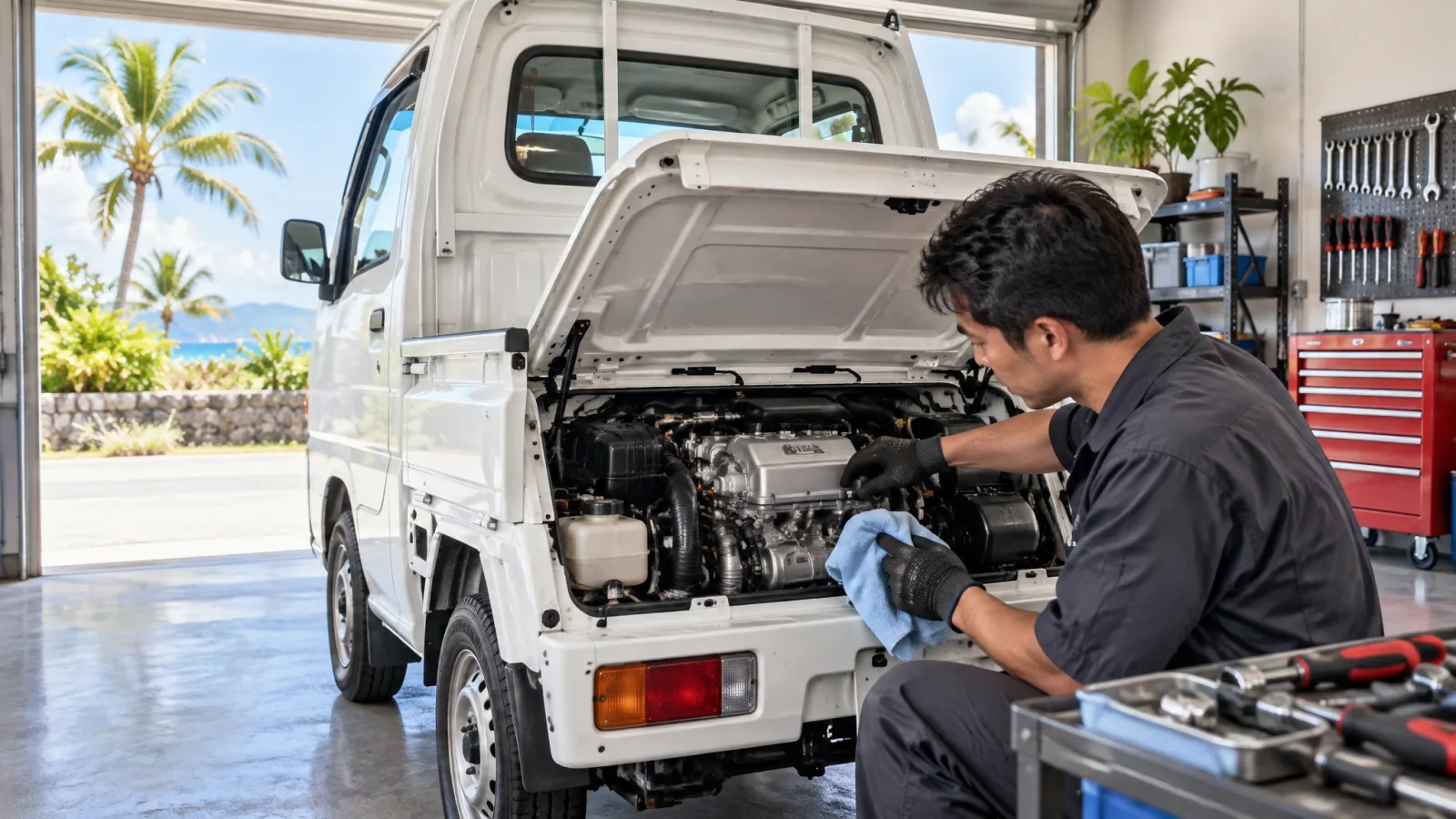
The Monthly JDM Maintenance Checklist for Puerto Rico's Climate
A simple month-by-month maintenance routine built for the heat, humidity and salt air of Puerto Rico. Follow this checklist and your imported kei truck, van or JDM car will stay reliable, rust-free and ready for decades.
La Lista de Mantenimiento Mensual para tu JDM en el Clima de Puerto Rico
Una rutina de mantenimiento mes a mes pensada para el calor, la humedad y el salitre de Puerto Rico. Sigue esta lista y tu kei truck, van o auto JDM importado se mantendrá confiable, sin óxido y listo por décadas.
7 Costly Mistakes First-Time JDM Importers Make (and How to Avoid Them)
Importing your first car from Japan should be exciting — not expensive in all the wrong ways. These are the seven mistakes we see first-time buyers make most often, and exactly how to sidestep each one so your dream JDM car arrives in Puerto Rico without nasty surprises.