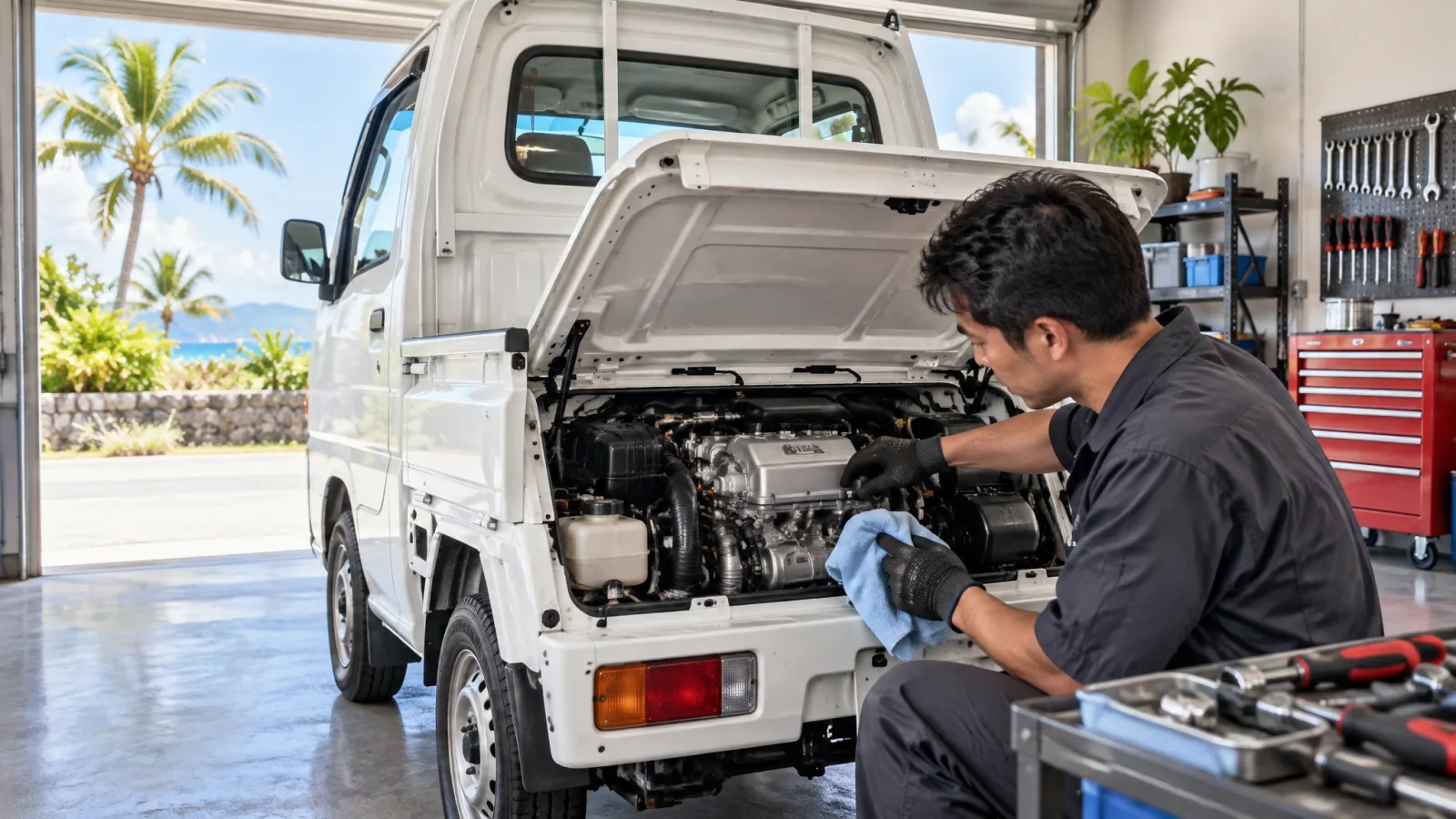
A Japanese import is one of the best-built vehicles you can own — but Puerto Rico's climate is a different world from the cool, dry prefectures these cars grew up in. Constant humidity, salt air near the coast, intense UV, and sudden tropical downpours all work against metal, rubber and fluids faster than they ever would in Japan.
The good news is that keeping a JDM vehicle healthy here isn't complicated or expensive. It just has to be consistent. A short, predictable routine every month catches small problems before they become breakdowns — and protects the resale value of a car that's only getting rarer. Here is the exact monthly maintenance rhythm we recommend to every customer who buys a kei truck, van or JDM car from us.
Why Monthly (Not Yearly) Matters in the Tropics
In a temperate climate you can get away with checking a car a couple of times a year. In Puerto Rico you can't. Humidity sits above 70% for most of the year, and that moisture creeps into every connector, bolt and brake line. Salt carried on the ocean breeze accelerates corrosion even if you never park on the beach. Heat thins out oil and bakes rubber seals.
A monthly 20-minute check is your single best defense. You're not doing a full service every month — you're looking, listening and topping up, so that nothing quietly fails between your proper services. Think of it as a habit, like checking the air in your tires: small effort, huge payoff.
Every Month: The Core 20-Minute Check
These are the items to run through once a month, every month, regardless of mileage:
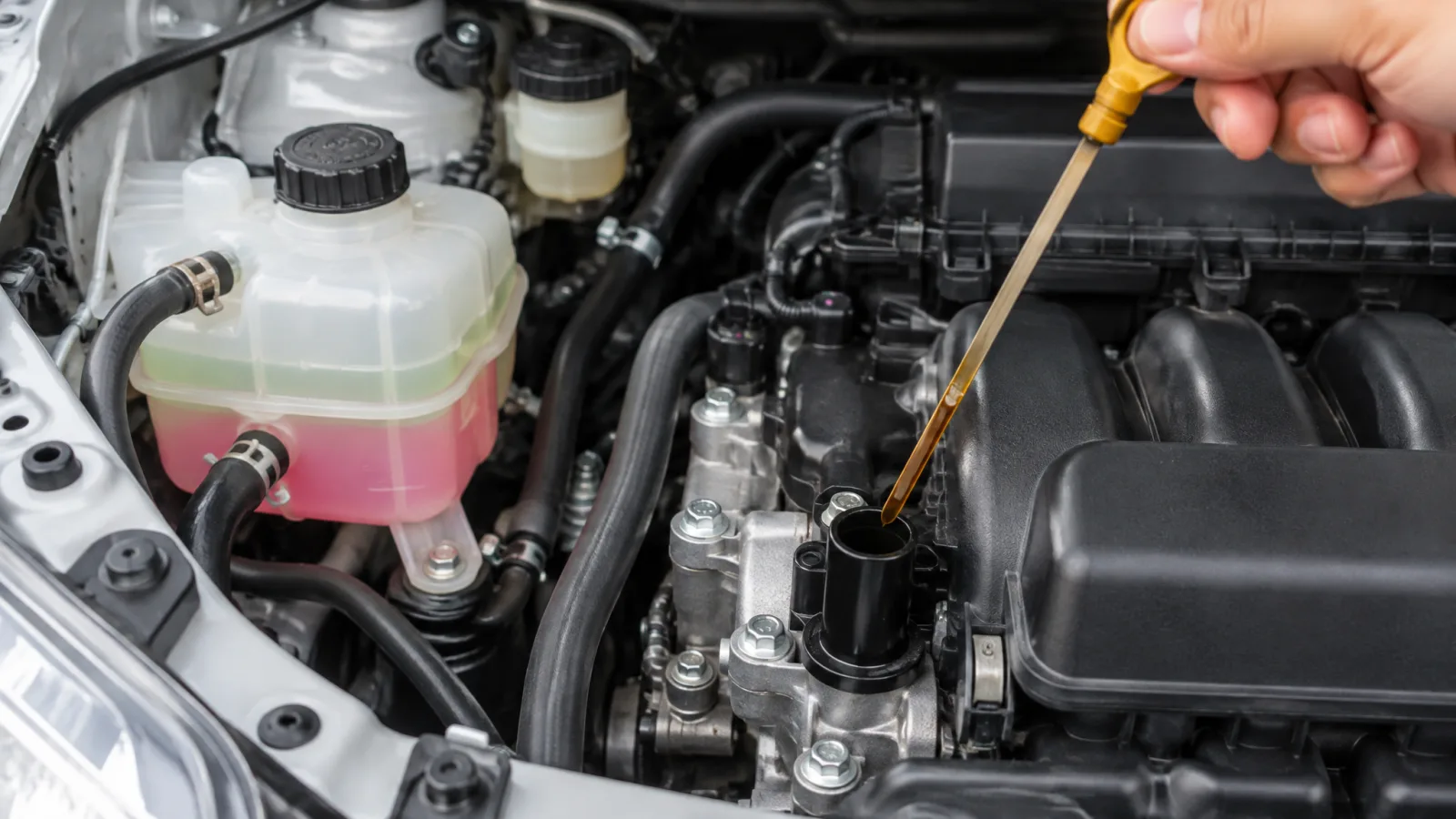
Engine oil level and color — With the engine cold and the vehicle level, pull the dipstick, wipe it, and check the level sits between the marks. Oil that looks milky or feels watery can mean moisture intrusion — common in humid climates on cars that only do short trips.
Coolant level — Check the overflow reservoir when cold. Kei engines are small and run hot in traffic, so a low coolant level is something you want to catch early.
Tire pressure and tread — Heat makes pressure swing more than you'd expect. Set pressures in the morning when tires are cool, and look for uneven wear or cracking in the sidewalls from UV exposure.
Lights and wipers — Test every bulb and run the wipers. Tropical rain arrives fast; worn blades and a dead bulb are the two things that catch people out in a downpour.
A walk-around for leaks and rust — Look under the vehicle for fresh drips and scan the usual rust spots: wheel arches, door sills, the bed floor on trucks, and any seam where water pools.
Fighting Rust and Salt — Your Most Important Habit
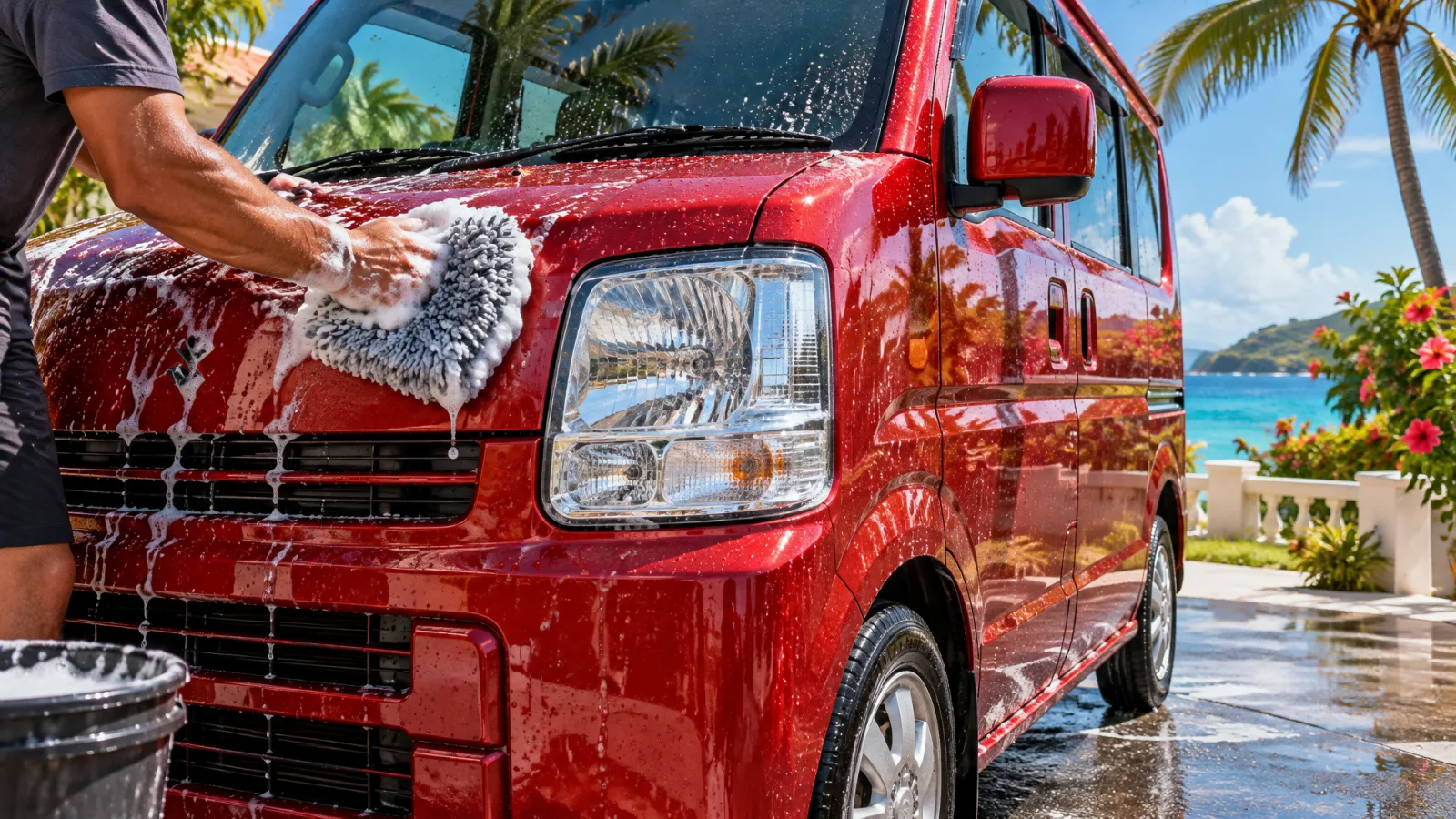
Rust is the number-one killer of imported vehicles in the Caribbean, and it's almost entirely preventable. The cars we import are inspected to be clean when they arrive — your job is to keep them that way.
Wash monthly, underneath included. A regular wash isn't vanity here; it's corrosion control. Rinse the undercarriage, wheel wells and chassis to flush off salt, especially after driving near the coast or through standing water.
Keep a coat of protection on the paint. A wax or sealant every couple of months gives UV and salt something to attack instead of your clear coat.
Treat the underbody. For trucks and vans that work near salt water, an annual underbody and cavity rust treatment is cheap insurance. Touch up any stone chips quickly before bare metal starts to bloom.
Dry out the interior. Humidity causes musty smells and mold. Crack the windows when parked in shade, run the A/C regularly, and consider moisture absorbers inside the cabin.
Every 3 Months: Fluids, Belts and Battery
Quarterly, go a little deeper:
Brake fluid — Brake fluid absorbs moisture, and humidity speeds that up. Check the level and the color; dark fluid should be flushed. Soft or spongy brakes in a hilly, wet island are not something to postpone.
Battery terminals — Heat and humidity shorten battery life and encourage corrosion on the terminals. Clean off any white or green buildup and make sure the clamps are tight.
Belts and hoses — Squeeze hoses for soft spots and look at belts for cracks or glazing. Rubber ages faster in heat and UV than most owners expect.
Air filter — Dusty roads and construction clog filters quickly. A choked filter robs a small kei engine of the power it doesn't have to spare.
Every 6–12 Months: The Real Service Items
Oil and filter change — Because many kei trucks and vans here do short, low-speed trips, change oil on time (or on mileage, whichever comes first) rather than stretching it. Short trips never fully burn off the moisture that condenses inside the engine.
Coolant — Replace on the manufacturer's schedule so the cooling system and its corrosion inhibitors stay effective.
Spark plugs — Fresh plugs keep a tiny 660cc engine starting cleanly and running efficiently.
Timing belt — If your vehicle uses a timing belt, know its replacement interval and stick to it. On an interference engine, a snapped belt is catastrophic — this is the one item never to gamble on.
Full brake inspection — Pads, shoes, lines and the handbrake, checked properly at least once a year.
Sourcing Parts and Keeping Records
One worry we hear constantly: "Can I even get parts for a Japanese import in Puerto Rico?" For the popular platforms we import — Honda Acty, Suzuki Carry, Daihatsu Hijet, Subaru Sambar and the common JDM engines — service parts like filters, plugs, belts, brakes and fluids are widely available, and anything model-specific can be ordered in. Keep your chassis code and engine code handy; it makes ordering the right part painless.
Keep a simple logbook. Note the date, mileage and what you did each month. It takes seconds, helps you spot patterns (a slow coolant drop, a tire wearing oddly), and it meaningfully increases resale value — buyers of 25-year-rule imports love a documented history. New to importing? Our guide on registering a JDM vehicle in Puerto Rico and the broader tropical-climate maintenance tips pair perfectly with this checklist.
None of this is hard — it's just consistent. Twenty minutes a month, a proper wash, and keeping to your service intervals will carry a well-chosen Japanese import through decades of Puerto Rico sun and salt without drama. These cars were overbuilt from the factory; your maintenance is simply protecting that head start.
Thinking about importing a kei truck, van or JDM car that will actually last here? Browse our current inventory or message me directly on WhatsApp — I'll help you pick a clean, well-maintained vehicle and tell you exactly what its upkeep will look like in our climate.
— J.J. Canino, Founder, JDM Direct
📚 Related Resources
Stay Updated
Get the latest JDM insights, new arrivals, and exclusive content delivered to your inbox.
Stay Updated on New Arrivals
Get notified when fresh JDM legends arrive in our inventory
We respect your privacy. Unsubscribe anytime.
