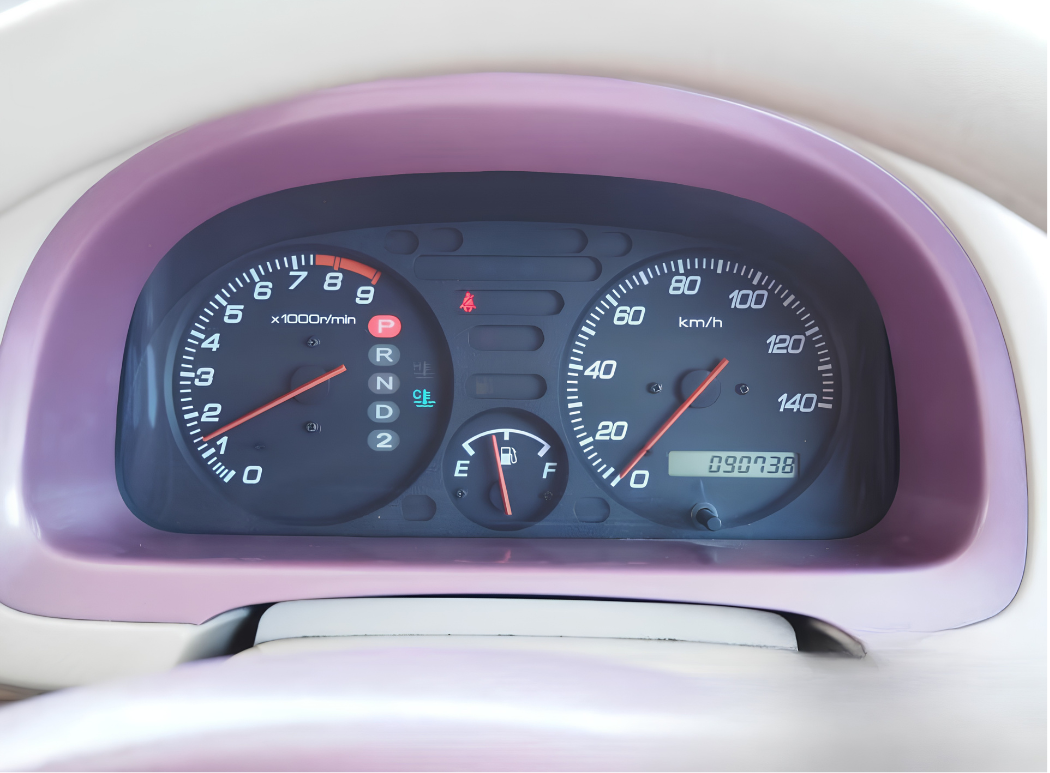
I'll never forget the first time I pulled up a listing for a Japanese kei truck and saw the odometer reading: 400,000 km.
My stomach dropped. Four hundred thousand? That truck must be completely worn out, right? I almost closed the tab — and I would have missed one of the best deals I've ever found. Because when I finally did the math, 400,000 km is actually about 248,500 miles. Still a lot? Sure. But for a bulletproof Honda Acty with meticulous Japanese maintenance records? That's a truck with plenty of life left.
That moment taught me something every JDM buyer needs to learn early: kilometers are not miles, and if you don't understand the conversion, you'll either overpay for low-km vehicles or walk away from incredible deals because the number on the dash looks scary. Let me break it all down for you.
The Simple Conversion: 1 Kilometer = 0.621 Miles
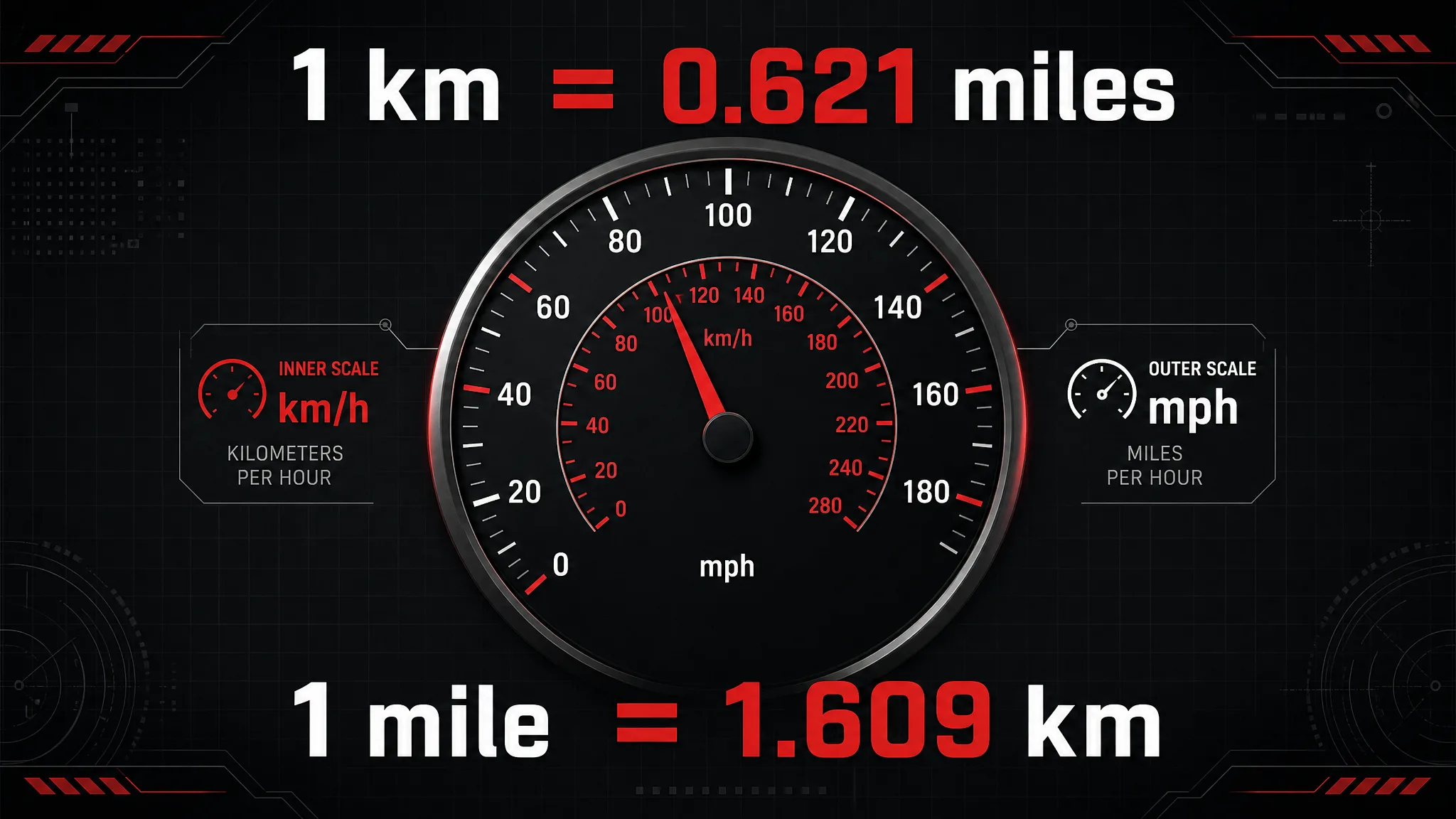
Here's the formula that changed everything for me:
To convert km to miles: Multiply by 0.621 (or divide by 1.609) To convert miles to km: Multiply by 1.609
Quick Reference Table: | Kilometers | Miles | Context | |-----------|-------|---------| | 10,000 km | 6,214 mi | Nearly new | | 50,000 km | 31,069 mi | Low mileage | | 100,000 km | 62,137 mi | Average used car | | 150,000 km | 93,206 mi | Well-used but healthy | | 200,000 km | 124,274 mi | High for US, normal for Japan | | 300,000 km | 186,411 mi | Work truck territory | | 400,000 km | 248,548 mi | My "scary" number — still viable! |
The Quick Mental Math Trick: Take the km number, cut it by 40%, and you have a close approximation in miles. So 100,000 km × 0.6 = roughly 60,000 miles. Close enough for a quick gut check when browsing listings.
Why Japanese Odometers Read So High (And Why It Doesn't Matter as Much as You Think)
When you see a JDM vehicle with 200,000+ km, your American instincts scream "high mileage!" But context matters enormously:
Japan's Shaken inspection system requires vehicles to pass rigorous safety and emissions testing every two years. Vehicles that aren't maintained to a very high standard literally cannot stay on the road. A Japanese car with 200,000 km has been inspected, maintained, and certified roadworthy 5+ times throughout its life.
Japanese driving conditions are gentler. Most driving in Japan happens at moderate speeds on well-maintained roads. There's no road salt eating away at undercarriages, no potholes destroying suspensions, and speed limits are strictly enforced. A kilometer driven in Japan is significantly easier on a vehicle than a mile driven on American highways.
Maintenance culture in Japan is different. Japanese owners follow manufacturer maintenance schedules religiously. Oil changes, timing belt replacements, fluid flushes — they happen on time, every time. Many vehicles come with complete service books documenting every maintenance visit.
The bottom line: A well-maintained Japanese vehicle with 200,000 km (124,000 miles) is often in better mechanical condition than a US-market vehicle with 80,000 miles that skipped oil changes and never saw a dealer service bay after the warranty expired.
Real Examples: What Those KM Numbers Actually Mean
Let me put some real-world context behind those numbers from vehicles I've personally imported:
2002 Honda Vamos — 148,000 km (91,960 miles) This little kei van had what looks like high mileage on paper. In reality? The engine purred like a kitten, the transmission shifted perfectly, and the interior looked like it had 50,000 miles on it. In the US, a minivan with 92,000 miles is just getting broken in.
1998 Suzuki Carry — 78,000 km (48,470 miles) This is what "low mileage" looks like in JDM terms. Under 50,000 equivalent miles on a 28-year-old truck? This thing was barely used. It sold within 24 hours of listing.
1995 Daihatsu Hijet — 245,000 km (152,237 miles) This sounds scary until you realize it's a work truck that spent its life making short trips on a Japanese farm at low speeds. The engine compression was perfect, the frame had zero rust, and it had a complete maintenance record. In the US, a farm truck with 152,000 miles would be a gamble. This one was a sure thing.
The lesson: Never judge a JDM vehicle by its kilometer count alone. Always look at the maintenance records, auction grade, and overall condition.
Speed Too: KM/H vs. MPH on Your Dashboard
The odometer isn't the only thing in kilometers — your speedometer will read in km/h too. This trips up a lot of first-time JDM owners:
Common speed conversions you'll need daily: | Speed Limit (MPH) | Your Speedometer (KM/H) | |-------------------|------------------------| | 25 mph (school zone) | 40 km/h | | 35 mph (city) | 56 km/h | | 45 mph (suburban) | 72 km/h | | 55 mph (highway) | 89 km/h | | 65 mph (interstate) | 105 km/h | | 70 mph (highway max) | 113 km/h |
Pro tips for daily driving: - Get a GPS speedometer app on your phone for the first few weeks. Mount it where you can see it easily. After a while, you'll internalize the conversion naturally. - Many JDM vehicles have a smaller mph scale on the speedometer — look for it on the inner ring. - Some owners add a small digital mph readout. We can recommend options that don't alter the original dash. - The quick mental shortcut: Divide the km/h reading by 1.6 for a rough mph estimate. So if your speedometer reads 80 km/h, you're doing about 50 mph.
Does High KM Affect Resale Value in the US?
This is a question I get constantly, and the answer is nuanced:
Among JDM-knowledgeable buyers: No. Experienced JDM enthusiasts understand the kilometer vs. mile distinction and evaluate vehicles on condition, not just odometer readings. In fact, a high-km vehicle with impeccable maintenance records can command a premium over a low-km vehicle with no documentation.
Among general car buyers: Sometimes yes. If you plan to resell to someone unfamiliar with JDM imports, they might see "200,000" on the odometer and assume the worst. This is actually an opportunity — you can buy high-km vehicles at lower prices and enjoy them knowing the mechanical reality is much better than the number suggests.
For insurance and registration: US insurance companies and DMVs record mileage in miles. When you register your JDM vehicle, the km reading is converted to miles on your title. A 150,000 km vehicle will show approximately 93,200 miles on your US registration — a perfectly normal number for a used vehicle.
Important: NEVER tamper with or misrepresent odometer readings. Odometer fraud is a federal crime. Always report the actual km reading and let the conversion happen properly during registration.
Handy Conversion Tools and Tips
Here are the tools I use every day when evaluating JDM inventory:
The 5/8 Rule (Quick Mental Math) Multiply kilometers by 5, then divide by 8. Example: 160,000 km × 5 = 800,000 ÷ 8 = 100,000 miles. It's accurate and easy to do in your head.
Google It Just type "200000 km in miles" into Google and it gives you an instant answer. Simple but effective when browsing listings at your desk.
Phone Calculator Keep it simple: km × 0.621 = miles. Bookmark it, make it muscle memory.
What's a "Good" KM Range for JDM Imports? - Under 80,000 km (under 50,000 mi): Premium condition, expect premium prices - 80,000–150,000 km (50,000–93,000 mi): Sweet spot for value and condition - 150,000–250,000 km (93,000–155,000 mi): Great deals if maintenance is documented - 250,000+ km (155,000+ mi): Work trucks and daily drivers — evaluate on condition, not km
That "scary" 400,000 km truck I almost passed on? I bought it. I converted the number, checked the maintenance history, and realized I was looking at a well-cared-for vehicle that had simply been used for what it was built to do. It's still running strong today.
The km-to-miles conversion is one of the first things every JDM buyer needs to master. Once you internalize it, you'll stop flinching at high km counts and start seeing opportunities that other buyers miss. You'll evaluate vehicles on what actually matters — condition, maintenance, and mechanical health — instead of getting spooked by a number.
If you're shopping for a JDM import and want help understanding what a specific km reading really means for the vehicle you're looking at, reach out to us on WhatsApp. We've evaluated thousands of Japanese vehicles and can tell you exactly what that odometer reading means in real-world terms.
— J.J. Canino, Founder, JDM Direct
📚 Related Resources
Stay Updated
Get the latest JDM insights, new arrivals, and exclusive content delivered to your inbox.
Stay Updated on New Arrivals
Get notified when fresh JDM legends arrive in our inventory
We respect your privacy. Unsubscribe anytime.
Related Posts
7 Costly Mistakes First-Time JDM Importers Make (and How to Avoid Them)
Importing your first car from Japan should be exciting — not expensive in all the wrong ways. These are the seven mistakes we see first-time buyers make most often, and exactly how to sidestep each one so your dream JDM car arrives in Puerto Rico without nasty surprises.

Yen vs. Dollar: Why the Exchange Rate Quietly Decides What Your JDM Import Costs
The yen just strengthened from about ¥160 to ¥153 per dollar in a matter of days — and that alone can add hundreds to the price of a car in Japan, even when the seller never raised it. Here's exactly how the exchange rate works, in plain English, and how to use it to your advantage.

Kei Trucks: The Ultimate Guide to Japan's Mini Workhorses for Puerto Rico
Discover why Japanese Kei trucks are becoming the go-to choice for farmers, landscapers, and small business owners in Puerto Rico. Compact, efficient, and surprisingly capable.